


The urethra is a tube that connects the urinary bladder to the genitals for removal of liquids out of the body. The epithelium of the urethra starts off as transitional cells as it exits the bladder. Further along the urethra there are stratified columnar cells, then stratified squamous cells near the external urethral orifice.1
In addition to functioning as physical barriers against microbes, the urethral epithelial linings participate in the first line of host defense by production of a variety of proinflammatory mediators when exposed to microbes and microbial agents. This might occur via adhesion-mediated signalling by receptor interaction or via attachment-facilitated presentation of conserved microbial patterns to TLRs on epithelial cells. It has been shown that infection of human urethral epithelial cells with Neisseria gonorrhoeae increases the transcription of several host anti-apoptotic genes, including bfl-1, cox-2, and c-IAP-2, which are dependent upon activation of the NF-KB signaling pathway.2 Moreover, it was demonstrated that Neisseria gonorrhoeae type IV pilus stimulates mechanosensitive pathways including PI-3 kinase in urethral epithelial cells, which enhance the expression of stress-responsive genes and activate cytoprotective signaling.3 On the other hand, primary human urethral epithelial cells have been immortalized by transduction with a retroviral vector expressing the human papillomavirus E6E7 oncogenes. This provides a good model for pathogenesis studies of urethral epithelial cells in various diseases.4
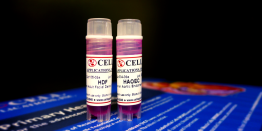
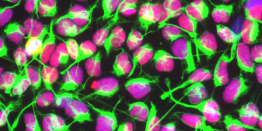
To meet various needs for research and development in human urethral epithelial cells, Cell Applications, Inc has isolated and purified Human Urethra Epithelial Cells (HUEpC) to create a more realistic in vitro model. Cell Applications' HUEpC are isolated from prostatic urethra. They are cryopreserved at second passage and can be cultured and propagated 10 population doublings. These cells have a characteristic morphology consistent with an epithelial origin and are positive for epithelial cell marker cytokeratin 19.
1. Hakky, S.I.: Br. J. Urol. 51:304-7, 1979
2. Binnicker, M.J. et al: Infect. Immun. 72:6408-17, 2004
3. Howie, H.L. et al: PLoS Biol. 3:e100, 2005
4. Harvey, H.A. et al: Infect. Immun. 70:5808-15, 2002
Characterization:
Each lot tested negative for HIV, Hepatitis B and Hepatitis C and negative for mycoplasma, bacteria, yeast, fungi.
Products are for research use only. They are not intended for human, animal, or diagnostic applications.
|