Umbilical
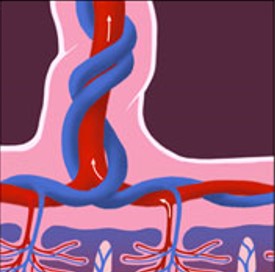
Umbilical cord tissue is a temporary, highly vascularized extraembryonic structure that connects the developing fetus to the placenta during gestation. Anatomically, the surface of the cord is covered by a specialized single layer of epithelium continuous with the amniotic membrane/epithelium. This sheath encloses three primary vessels: two umbilical arteries and one umbilical vein. The umbilical arteries return deoxygenated and waste-laden fetal blood to the placenta, while the single umbilical vein delivers oxygenated, nutrient-rich blood from the placenta to the fetus.
Surrounding and mechanically isolating these blood vessels is Wharton’s jelly, a gelatinous, proteoglycan-rich mucoid connective tissue. It is composed predominantly of a dense extracellular matrix (ECM) network rich in collagen fibers, hyaluronic acid, sulfated glycosaminoglycans, and structural proteoglycans (such as decorin and versican). Wharton’s jelly acts as a critical structural cushion, providing hydrostatic insulation and mechanical protection against cord compression, torsion, and true knotting in utero. Because it is harvested non-invasively post-birth, umbilical cord tissue is recognized as a rich, ethically uncontroversial repository of neonatal stem, progenitor, and primary vascular cells, serving as a critical platform in regenerative medicine, developmental biology, and advanced cardiovascular research.
