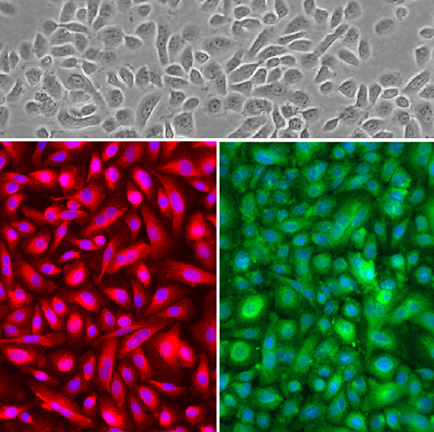
Human Small Airway Epithelial Cells: HSAEpC

Human Small Airway Epithelial Cells (HSAEpC) are a specialized population of epithelial cells derived from the distal regions of the respiratory tract, specifically the bronchioles (airways less than 2 mm in diameter).

Quantity

Description

News Release

Human Small Airway Epithelial Cells (HSAEpC) are a specialized population of epithelial cells derived from the distal regions of the respiratory tract, specifically the bronchioles (airways less than 2 mm in diameter). Unlike human bronchial epithelial cells or human bronchial tracheal epithelial cells that line the larger conducting airways, these primary small airway cells represent the critical interface between the conducting zone and the gas-exchange regions of the lung.

Found within the terminal and respiratory bronchioles, these cells function as the primary guardians of the distal lung environment. They maintain airway homeostasis by forming a tight, semi-permeable barrier. Their physiological roles include:

  • Barrier Integrity: Protecting the underlying smooth muscle and submucosal tissue from inhaled pathogens, environmental pollutants, and particulates.
  • Immune Sentinel: Acting as the first line of host defense, these cells detect cellular stress and pathogens, initiating complex signaling cascades that lead to pulmonary inflammation through the secretion of cytokines and chemokines.
  • Repair and Homeostasis: These cells participate in the dynamic processes of wound healing, tissue remodeling, and the maintenance of the lung microbiome.
The regenerative capacity of the small airway is sustained by resident stem cells, such as basal cells, which are crucial for repairing the primary airway epithelial cells layer following injury. In contemporary research, the ability to manipulate stem cell differentiation kits has allowed scientists to better understand how these progenitors transition into mature phenotypes. While research into neural stem cells, skeletal muscle, and bone marrow-derived or umbilical cord-derived cells often explores regenerative medicine broadly, studies on HSAEpC focus specifically on maintaining lung-specific lineages.

Because they are donor specific cells, HSAEpC provide highly relevant models for studying genetic diversity in airway diseases, including chronic obstructive pulmonary disease (COPD), cystic fibrosis, and asthma. Research using lung cell systems — often moving beyond standard 2D culture to advanced formulations of 3D organoids and “airway-on-a-chip” technology (microfluidic devices mimicking lung physiology) — has become the gold standard. To maintain physiological relevance, researchers often employ xeno free cell culture media and specific attachment factors to ensure the cells retain their native phenotype, mirroring the behavior of bronchial tracheal epithelial cells or native tissue. These models are indispensable for:

  • Drug Discovery: Screening compounds for toxicity and efficacy in environments that simulate the human lung, rather than relying solely on non-pulmonary tissue types or validated fibroblasts.
  • Pathophysiology: Unraveling how cellular stress (e.g., cigarette smoke or pollution) triggers the interaction between the epithelium and surrounding bronchial tracheal smooth muscle cells.
  • Biobanking: To ensure experimental reproducibility, cells are carefully cryopreserved in liquid nitrogen, allowing for consistent, high-quality scientific references across long-term studies.

HSAEpC represent a vital, physiologically accurate model for the distal lung. By bridging the gap between basic cell biology and clinical pathology, these cells allow researchers to study the mechanisms of airway inflammation and disease progression in a controlled, human-relevant system. As noted in recent literature (e.g., doi.org/10.7554/eLife.66417), the development of these advanced models is essential for moving toward personalized therapeutic strategies in respiratory medicine.
Human Small Airway Epithelial Cells (HSAEpC) are isolated from the distal portion of lung tissue in the bronchiole area of the respiratory tract. Located in a region critical to gas exchange and immune response, HSAEpC provide an in vitro model to research cell biology, immunology and pharmaceutical drug discovery.  The small (pulmonary) epithelium forms a continuous lining in the airways, offering mechanical and immunological barriers against the external environment, physically protecting the underlying submucosa.

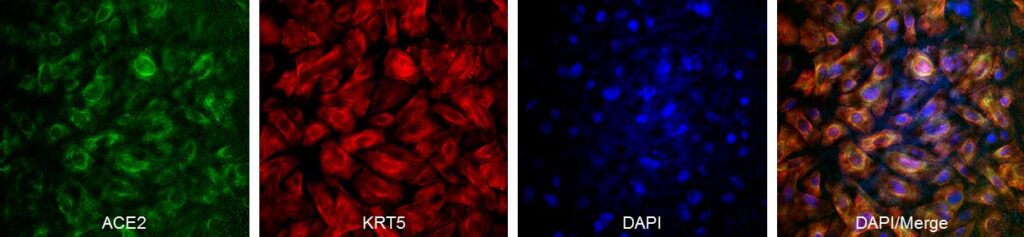
Below, HSApC from Cell Applications are stained with ACE2 and KRT5. Ongoing research suggests ACE2 is the cellular receptor utilized by SARS-CoV-2, the coronavirus that causes COVID-19, for cell entry.

SAEpC ACE2 KRT5 staining 200504_0

For general cell biology and airway function, the cells provide insights into pulmonary fluid balance, vascular and airway homeostasis and even the lung microbiome. Other work highlights epithelial cell junction integrity, and maintenance of the alveolar barrier integrity that provides first line host defense against inhaled pathogens. HSAEpC help unravel inflammatory signaling pathways, transcription factors and gene expression cascades. Decades of work in lung remodeling, wound healing and repair of surface airway epithelium damage have more recently paved the way to lung organoids and 3D models of small airway epithelium.

Primary HSAEpC offer physiological relevance to the study of respiratory infection, recognition, and immune responses to bacteria, viruses and other foreign invaders like nanoparticles, air pollution and cigarette smoke.  Such insults trigger production of chemokines, cytokines and lipids that mediate inflammation and recruit inflammatory cells. HSAEpC dysregulation has also be studied in terms of apoptosis, superoxide production and the effects of hypoxia or radiation.

HSAEpC are targeted in chronic diseases like bronchiolitis, asthma, COPD, cystic fibrosis, pulmonary hypertension and lung cancer.  Accordingly, the cells find increasing applications for drug discovery assays, in the hope to identify new therapeutic options to treat or prevent airway disorders.  Such tests included compound screening, toxicology, drug uptake and response, in formats ranging from standard 2D assays and microplates to 3D tissue models and airway-on-a-chip technology.

Details

Tissue Human small airway of lung (Nondiseased)
QC No bacteria, yeast, fungi, mycoplasma, virus
Bioassay Attach, spread, proliferate in Growth Med
Cryovial 500,000 HSAEpC (1st passage) frozen in Basal Med w/ 10% FBS, 10% DMSO
Kit Cryovial frozen HSAEpC (532-05a), Gr Med (512-500), Subculture Rgnt Kit (090K)
Proliferating Shipped in Gr Med, 3rd psg (flasks or plates)
Doublings At least 6
Applications Laboratory research use only (RUO). Not for human, clinical, diagnostic or veterinary use.
Instructions HSAEpC

Format: PDF

DOWNLOAD NOW
MSDS Cryopreserved Cells

Format: PDF

DOWNLOAD NOW

Resources

MSDS Cryopreserved Cells

Format: PDF

DOWNLOAD NOW
Cell Apps Flyer Epithelial Cells

Format: PDF

DOWNLOAD NOW
5 Important Cell Culture Rules

Format: PDF

DOWNLOAD NOW
Cell Apps Poster Primary Cells

Format: PDF

DOWNLOAD NOW
Cell Applications Inc Brochure

Format: PDF

DOWNLOAD NOW

FAQs

Extended Products

Size: 50 ugCat.#: 1H40-50Price: $240.00
Size: 250 ugCat.#: 1H40-250Price: $894.00
Size: 1 KitCat.#: TF102KPrice: $538.00
Size: 1 Sample KitCat.#: TF102KSPrice: $72.00