


The proximal tubule is the portion of the duct system of the nephron of the kidney which leads from Bowman's capsule to the loop of Henle. It has a single epithelial cell layer. The luminal surface of the epithelial cells of the proximal tubule is bordered with millions of microvilli that form a brush border and increase surface area. The basal and lateral cell membrane forms infoldings in a complex labyrinth in contact with the interstitial fluid and blood vessels.1 HRPTEpCs have a pivotal role in kidney functions such as reabsorbtion of glucose and protein filtered by glomerulus and secretion of organic acids and drugs; they also play a part in the glucotoxicity associated with diabetes.2,3 The progression of renal dysfunction in type 2 diabetes heavily involves injury of the tubular epithelium as well as the glomerulus.4
It has been shown that under normal circumstances tubular epithelial cells in the adult rat kidney turn over very little, but after an acute injury many mitotic cells have been observed both by proliferating cell nuclear antigen (PCNA) staining and by incorporation of the thymidine analogue bromodeoxyuridine (BrdU). Alternative explanations have been proposed such as the existence of resident renal stem cells or the influx of hematopoietic stem cells from the bone marrow5 instead of the initial belief that the surviving epithelial cells dedifferentiate, move through the cell cycle until tubular integrity is restored, go back into G0 phase, and redifferentiate.
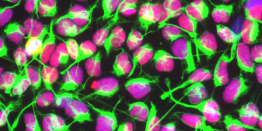
Human Renal Proximal Tubular Epithelial Cells (HRPTEpC) provide a useful tool for studying various aspects of pathology and biology of the human renal proximal tubular cells in vitro. To meet various needs for research and development, Cell Applications, Inc isolated and purified HRPTEpC to create a more realistic in vitro model. Cell Applications' HRPTEpC are isolated from proximal tubules of human kidney. They are cryopreserved at second passage and can be cultured and propagated at least 3 population doublings for adult HRPTEpC and 10 population doublings for neonatal HRPTEpC. The cells have a characteristic morphology consistent with an epithelial origin and are positive for epithelial cell marker cytokeratin 19.
1. Weier, Q.I. et al, Nephrol. 12:155 (2007)
2. Gilbert R. E. et al, Kidney Int 56:1627 (1999)
3. Ziyadeh F. N. et al, Am. J Physiol. 259:F704 (1990)
4. Debnam E. S. et al, Kidney Int 50:110 (1996)
5. Vogetseder, A. et al, Am. J. Physiol. Cell Physiol. 292:C807(2007)
Characterization:
Each lot tested negative for HIV, Hepatitis B and Hepatitis C and negative for mycoplasma, bacteria, yeast, fungi.
Products are for research use only. They are not intended for human, animal, or diagnostic applications.
|