



Main Page >> >> Human Bladder Epithelial Cells: HBlEpC
Human Bladder Epithelial Cells: HBlEpC


(Enlarge Image)

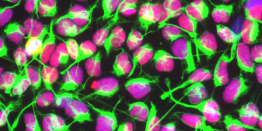
Left: Human Bladder Epithelial Cells, HBlEpC
Right:
HBlEpC immunofluorescently stained with anti-CK18 antibody

The bladder epithelium forms an effective barrier to urine, toxic metabolites, and pathogens. Work in the past decade demonstrates that this barrier is multifactorial and includes surface glycans, membrane lipids, tight junction proteins such as claudins, and UPs. UPs function as an integral part of the innate immune system, which stimulates apoptosis when these cells are infected with bacteria. Beyond the role of the bladder epithelium in forming a barrier, the presence of aquaporins (AQPs), urea transporters, and ion channels indicates that the bladder epithelium has all the machinery necessary to actively alter the composition of the urine. Therefore, this tissue may play an unappreciated but important role in water, salt, and solute homeostasis. One of the most exciting functions of the bladder epithelium is its potential role as a sensory transducer. By receiving, amplifying, and transmitting information, the bladder epithelium can convey information about the mucosa and urinary space to the nervous and muscular systems and help coordinate bladder function during filling and voiding.

Urothelial carcinoma of the bladder is unique among epithelial carcinomas in its divergent pathways of tumorigenesis. Low-grade papillary tumors rarely become muscle-invasive and they frequently harbour gene mutations that constitutively activate the receptor tyrosine kinase–Ras pathway. By contrast, most high-grade invasive tumors progress to life-threatening metastases and have defects in the p53 and the retinoblastoma protein pathways. Correcting pathway-specific defects represents an attractive strategy for the molecular therapy of urothelial carcinomas.1 Aberrant activation of the phosphatidylinositol 3-kinase (PI3K) pathway has been identified in a wide range of cancers. Recent reports in the literature have identified alterations in pathway components PIK3CA, PTEN, AKT1 and TSC1 in bladder cancer, some of which are significantly related to tumor phenotype and clinical behaviour.2

Human bladder epithelial cells (HBlEpC) can be used as a powerful tool in studying not only bladder epithelial development and function, but also the processes by which epithelial cells achieve and maintain their specialized plasma membrane domains, and how these functions are disrupted in disease. To meet various needs for research and development, Cell Applications, Inc has isolated and purified HBlEpC to create a more realistic in vitro model. Cell Applications' HBlEpC are isolated from normal human bladder. They are cryopreserved at second passage, and can be cultured and propagated 5 population doublings. The cells have a characteristic morphology consistent with an epithelial origin and are positive for epithelial cell marker cytokeratin 19.

1. Wu, X. R., Cancer Metast. Rev. 28:281 (2009)
2. Platt, F.M. et al, Clin. Cancer Res. 15:6008 (2009)

Characterization:  

Each lot tested negative for HIV, Hepatitis B and Hepatitis C and negative for mycoplasma, bacteria, yeast, fungi.
Products are for research use only. They are not intended for human, animal, or diagnostic applications.


Tissue:
Normal human bladder
Cryopreserved ampoule:
2nd passage, >500,000 cells in Epi Basal Medium containing 10% FBS & 10% DMSO.
Kit contains:
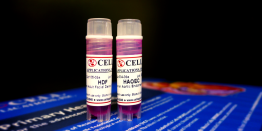
Ampoule of cryopreserved HBlEpC (938-05a), 500 ml Epi Growth Medium (215-500), and a Subculture Reagent Kit (090K).
Proliferating Cells:
 
Shipped in Epi Transfer Medium at third passage in either flasks or multiwell plates.
Population doublings:
Can be cultured at least 5 doublings


Call 800-645-0848 or 858-453-0848 to place an order.
Cell Products
Product Name Product Description Size Cat. No. Price
Cryopreserved HBlEpC, adult Contains an ampoule of cryopreserved HBlEpC (938-05a), 500 ml Epi Growth Medium (215-500), and a Subculture Reagent Kit (090K). 1 Kit
1 Ampoule
938K-05a
938-05a
$781
$625
Proliferating HBlEpC, adult Cultured and shipped in Epi Transfer Medium at third passage in either flasks or multiwell plates. T-25 Flask
T-75 Flask
6 well
96 well
939-25a
939-75a
939-6Wa
939-96Wa
$625
$815
$815
$935
 
Media and Reagents
Product Name Product Description Size Cat. No. Price
Epi Growth Medium Optimized and ready for use 500 ml 215-500 $115
Epi Growth Medium Kit Basal Medium & Growth Supplement packaged separately Yields 500 ml 215K-500 $125
Epi Basal Medium Add Growth Supplement before use 500 ml 214-500 $68
Epi Growth Supplement Added to Basal Medium to create Growth Medium 5 ml (3 parts) 215-GS $57
Subculture Reagent Kit 100 ml each of HBSS, Trypsin/EDTA & Trypsin Neutralizing Solution 100 ml 090K $51