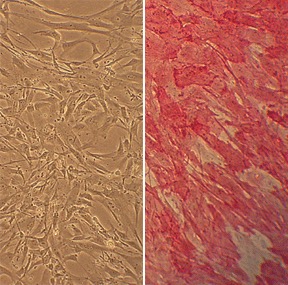
Human Carotid Artery Smooth Muscle Cells: HCtASMC
Human Carotid Artery Smooth Muscle Cells (HCtASMC) are specialized cells isolated from the tunica media of the human carotid artery.
Description
Human Carotid Artery Smooth Muscle Cells (HCtASMC) are specialized cells isolated from the tunica media of the human carotid artery. As a principal smooth muscle cell type within the primary arterial system supplying blood to the brain, HCtASMC are a widely used in vitro model that help study mechanisms by which carotid VSMCs regulate tone and contribute to disease. They serve as a vital in vitro model for investigating cerebrovascular remodeling, injury responses, and macrovascular disease.
The carotid arterial system—comprising the common carotid artery and its internal and external branches—is subjected to unique mechanical environments. The carotid bifurcation, in particular, experiences complex hemodynamics, including disturbed blood flow and low oscillatory shear stress. These local mechanical forces, interacting with systemic risk factors, render the carotid bifurcation highly susceptible to the development of complex atherosclerotic lesions. Because advanced carotid plaques can cause critical stenosis or rupture, leading to transient ischemic attacks (TIAs) or ischemic strokes, HCtASMC are heavily utilized to understand how local wall biology governs plaque stability and vascular occlusion.
In a healthy physiological state, these vascular smooth muscle cells exhibit a quiescent, contractile phenotype optimized to regulate vessel diameter and manage arterial compliance. However, under conditions of mechanical injury, chronic inflammation, or dyslipidemia, they undergo phenotypic switching to an active, synthetic state that drives arterial remodeling:
-
Neointimal Cellularity: Activated HCtASMC exhibit both hyperplasia (increased cell number via proliferation) and hypertrophy (increased cell size). While hypertrophy increases individual cell mass, it is cellular proliferation (hyperplasia) that primarily accounts for the increased neointimal cellularity that narrows the vessel lumen during atherogenesis and stent restenosis.
-
Intimal Migration: Synthetic smooth muscle cells migrate from the tunica media into the tunica intima to form a neointima. While contemporary lineage-tracing studies show that intimal cells can also originate from alternative sources—such as endothelial-to-mesenchymal transition (EndMT) or adventitial progenitors—medial VSMCs remain a major cellular contributor to the expanding intima.
-
Plaque Architecture and Calcification: HCtASMC play a dual role in advanced lesions. They are responsible for synthesizing the protective, collagen-rich fibrous cap that stabilizes the plaque against rupture. Conversely, they can also undergo an osteogenic transition, actively depositing calcium phosphate minerals. This VSMC-driven process contributes to vascular calcification, a heterogeneous phenomenon that also involves extracellular vesicle nucleation, inflammatory signaling, and necrotic core mineralization.
Researchers utilize HCtASMC in cell culture to simulate clinical vascular conditions and evaluate the efficacy of novel disease treatments:
-
Stent Restenosis and Angioplasty: HCtASMC provide a high-fidelity platform to study the vascular wall’s response to clinical interventions. Researchers model the mechanical trauma caused by carotid endarterectomy or carotid artery stenting to identify molecular targets that can suppress aggressive post-procedure neointimal hyperplasia.
-
Metabolic and Inflammatory Stress: These cells are used to investigate how systemic risk factors, such as circulating oxidized LDL, pro-inflammatory cytokines, or elevated glucose levels, impair smooth muscle function, accelerate phenotypic drift, and weaken the arterial wall’s structural defense.
Details
| Tissue | Normal healthy human normal carotid artery | |
|---|---|---|
| QC | No bacteria, yeast, fungi, mycoplasma, virus | |
| Character | Smooth muscle specific α-actin positive | |
| Bioassay | Attach, spread, proliferate in Growth Med | |
| Cryovial | 500,000 HCtASMC (2nd passage) frozen in Basal Medium w/ 10% FBS, 10% DMSO | |
| Kit | Cryovial frozen HCtASMC (3014-05a), Grwth Med (311-500), Subcltr Rgnt Kit (090K) | |
| Proliferating | Shipped in Gr Med, 3rd psg (flasks or plates) | |
| Doublings | At least 10 | |
| Applications | Laboratory research use only (RUO). Not for human, clinical, diagnostic or veterinary use. |
Resources
FAQs
Need More Help?
Visit our comprehensive FAQ page for detailed answers to common questions.
Need More Help?
Visit our comprehensive FAQ page for detailed answers to common questions.
Primary Cell FAQs Powered by Bioz